
Why patience comes in shades of brown
When the white snow melts, we’re left with brown.
That at least is what is happening at Lucas House, my garden next to the post office in Haliburton.
The Little Bluestem, so radiant in the low evening sun of fall, was flattened and matted. The asters, which were tall last year, survived the blanket of snow. Dormant, yes. Architectural, very much.
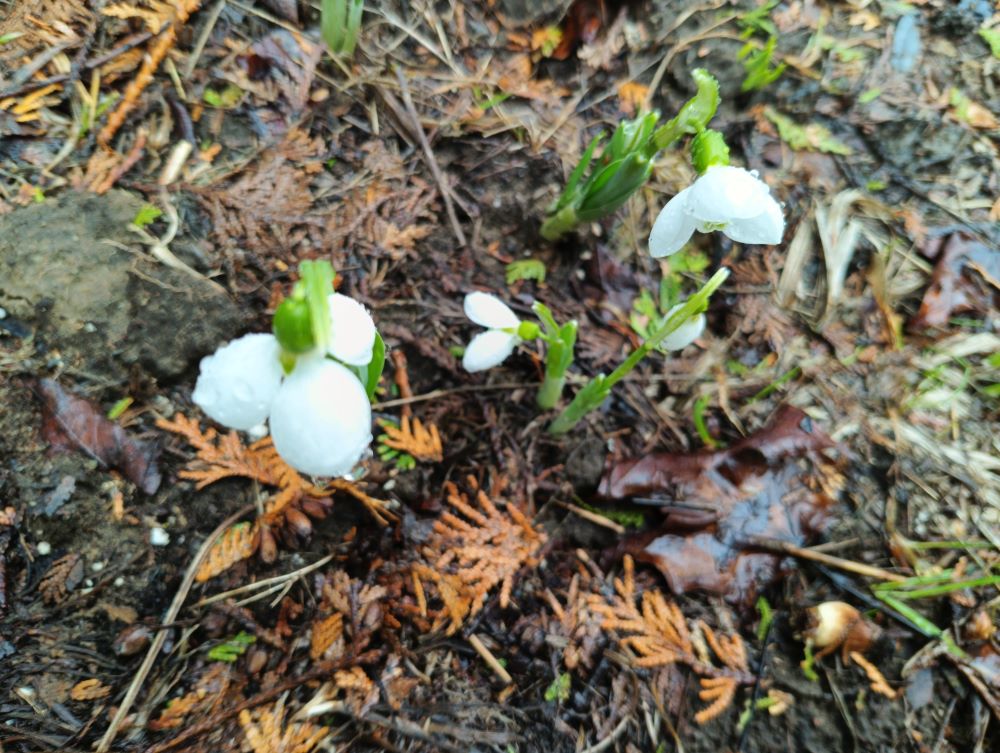
Beneath the brown, Prairie Smoke foliage is green. And by the cedars are Snowdrops.
What’s already happening
Someone on my road collects sap for syrup. A few weeks ago, his buckets were filling fast. I could see the line through the white plastic get higher every day. The maples were doing their invisible work ready for spring.
Different plants work to different clocks. Cool-season grasses (like our lawns) and sedges get going more quickly. Warm-season grasses, such as my Little Bluestem, won’t move until the soil warms more.
Small buds are on the branches of my two Serviceberry trees, responding to the length of the day and the temperature of the air.
Below ground, as the soil warms, roots are growing. Plants are doing important work where we can’t see it.
Woodland species are some of the quickest to get started. They leaf out and photosynthesize before the canopy blocks the light. This is why this time of year rewards a slow walk through our forests, from tiny Spring Beauty to white and red Trillium.
These early plants are subtle, which is why the dominant colour of most gardens as spring begins is brown – last year’s fashion from this year’s slow movers.
And it’s why I cheated with my non-native (but not damaging) Snowdrops.
My role
I removed the flattened grasses last week, leaving a few that still have good structure. I also left the asters standing – there might be bees still sleeping in their stems.
Composting the dead and rotting material in a cage behind the house makes the landscape look more tidy and allows light to reach the Prairie Smoke and other plants that are beginning to get going.
This year I’ve ordered more woodland species for the shaded part of the garden. They’ll provide food and habitat for insects in this brownest of months. And I’ll shamelessly plant more Snowdrop bulbs next fall.
But I’m also practising patience.
The waiting game
Patience isn’t just for the weeks of spring, it’s for the years of the garden.
When Lucas House was just planted it looked sparse, threadbare. The plants were small and spaced out. Most of what you saw was soil and mulch. The plants’ work was happening underground and out of sight. Their roots were exploring the soil.
And that patience will continue in the years ahead. I’m still waiting for my Butterfly Milkweed to get going, it’s such a slow mover. And the sedges I planted last year – I need to wait to see if they’ll fill in.
The Slender Mountain Mint was thin in the first year, then vigorous in the second, home and food to scores of insects.
As you walk towards the main entrance of Lucas House, look carefully on the right-hand side and you might notice Wild Strawberry, its green leaves, low to the ground and already growing.
It’s not the first thing that catches your eye amid the brown.
But the plant is alive and in a few weeks it will have tiny white flowers and the sweetest of fruit.