
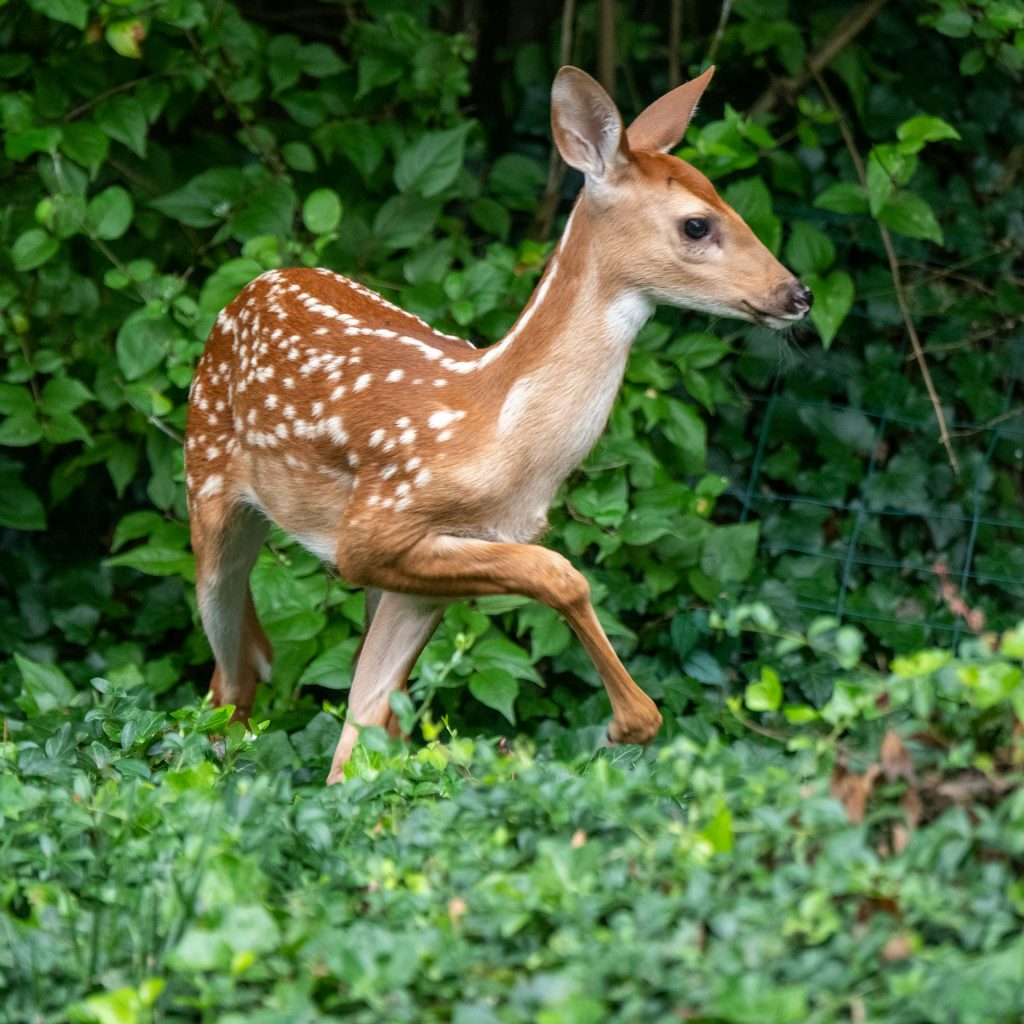
Gardening with cute, hungry deer
A couple of summers ago, I happened upon a fawn resting in my garden at Lucas House in Haliburton. It looked peaceful, relaxed. Its mother was nibbling at the post office next door.
How wonderful, I thought. The deer are at home here. The doe is happy to leave its fawn, safe in my garden. What a lovely picture of nature in harmony with its surroundings and in harmony with me!
And then I remembered how the animals had eaten through the landscape. How the Lanceleaf Coreopsis was just about to flower when its buds were nibbled off. The expensive Pagoda Dogwood that was left with just two lonely leaves. The Pale Purple Coneflowers that never really got going.
Showing nature at its best
Lucas House is my demonstration garden. I ripped out the lawn four years ago, replacing it with hundreds, maybe thousands, of plants. The idea is to show how we can live without lawn, and how we can make something that’s as attractive to us as it is to butterflies and bees.
And it is attractive. The Little Bluestem grass became the unexpected star, waving in the breeze and turning bronze in the fall.
The Slender Mountain Mint is an August insect powerhouse. It is, as they say, crawling with them.
Monarch butterflies have flocked to the Swamp Milkweed, just feet from where the fawn was resting.
Pearly Everlasting provides flowers that go from July through October. Prairie Smoke brings a touch of the weird with its feathery seeds. Strawberry and Silverweed cover the ground with green, red and silver.
And on sunny summer days, you can hear the insects. They’re as loud as the traffic. The place is alive – before it was on life-support.
Why deer feel at home
Dr Ellic Weitzel, an historical ecologist and archaeologist at the Smithsonian National Museum of Natural History, said on the Growing Greener podcast that our gardens are ideal places for deer. They like the kind of habitat we provide: not forest, but not completely open – our gardens mimic woodland edges with their young shrubs that provide both food and cover.
So it’s no wonder the fawn was resting at Lucas House, close by the cover of the cedar hedge, sheltered by the building, fed by the plants.
What I’ve tried
I’ve spent four years figuring out how to live with deer. I’ve chosen plants they stay away from – grasses, sedges, leaves with flavour or hairs. I’ve used tough plants as bodyguards for tender plants, hoping the deer will give up and go elsewhere. I’ve sprayed with Bobbex. It stinks. It seems to work. You can buy it at Home Hardware. But you’ve got to use it before the deer come, not when it’s too late.
The municipality has been helping, too. Not just for my garden: feeding encourages deer into areas with lots of traffic where they – or we – get hurt. So feeding them isn’t allowed in the downtown. I don’t know if it’s working yet – perhaps.
This year I am upping my game. I’ll be exploring using wire guards around the new shrubs I’m planting this spring. Will the wire be ugly? Maybe. Will the guards work? I don’t know.
Whether my defenses work or not, the garden is working. The Coreopsis that was browsed to stubs came back thicker last year.
This coming summer, I expect to see the deer in the garden again. I will walk to the post office and notice them pluck the Coreopsis buds.