
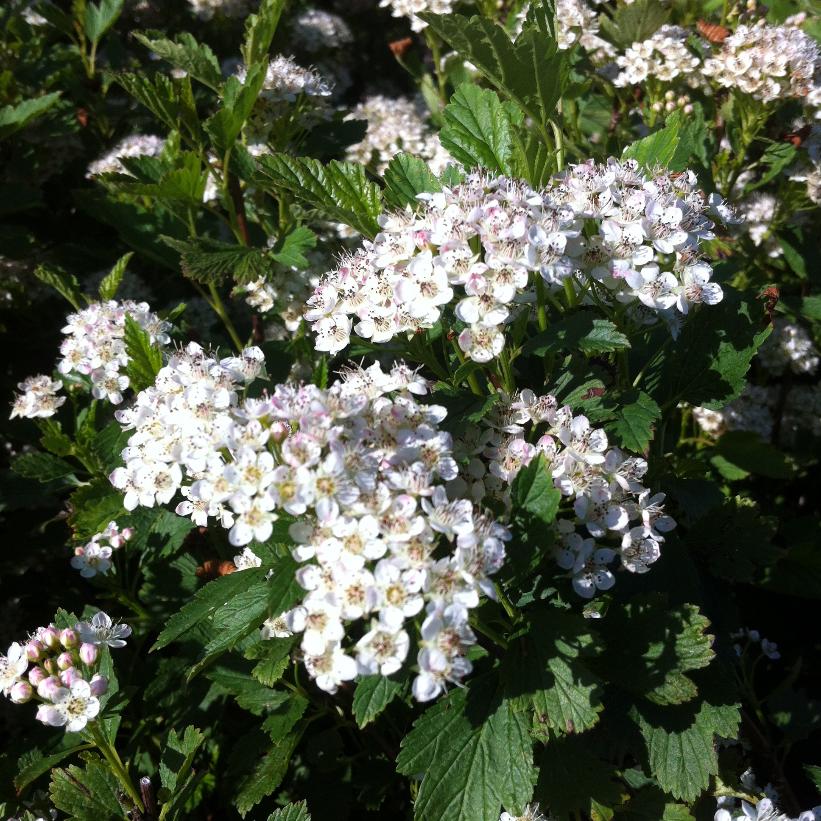
Dwarf Ninebark (cultivar)
Dwarf cultivar of common ninebark reaching 2-4 feet tall and wide with rounded, mounded form. Features palmate lobed leaves and clusters of small white to pink flowers. Distinctive exfoliating bark reveals layers of different colored inner bark. Extremely adaptable to wide range of soil and moisture conditions. Important pollinator plant and wildlife habitat. Native to eastern North America.
Plant Details
Bloom Colour: White to Pink
Bloom Time: Late Spring to Early Summer
Sun Requirements: Sun to Part-Shade
Moisture: Dry to Moist-Drained
Phenology: Leaves emerge May. Flat-topped clusters of small white to pink flowers appear June-July, highly attractive to pollinators. Papery reddish fruits develop August-September, persisting through winter providing winter interest. Yellow fall color develops October.
Wildlife Value: Critical nectar source for native bees, honeybees, and butterflies; persistent fruits provide winter food for seed-eating birds; dense branching provides nesting sites; larval host for 41+ species of Lepidoptera including specialist beetles
Habit Over Time: Develops into dense, rounded shrub with multiple stems from base. 'Nanus' cultivar maintains compact 2-4 foot height and width. Distinctive exfoliating bark provides winter interest. No spreading or suckering - remains as individual specimen. Creates reliable mid-height structure layer. Can be rejuvenated by cutting to ground in late winter.
Height: Short to Medium (2-4 feet)