
Shoreline Garden
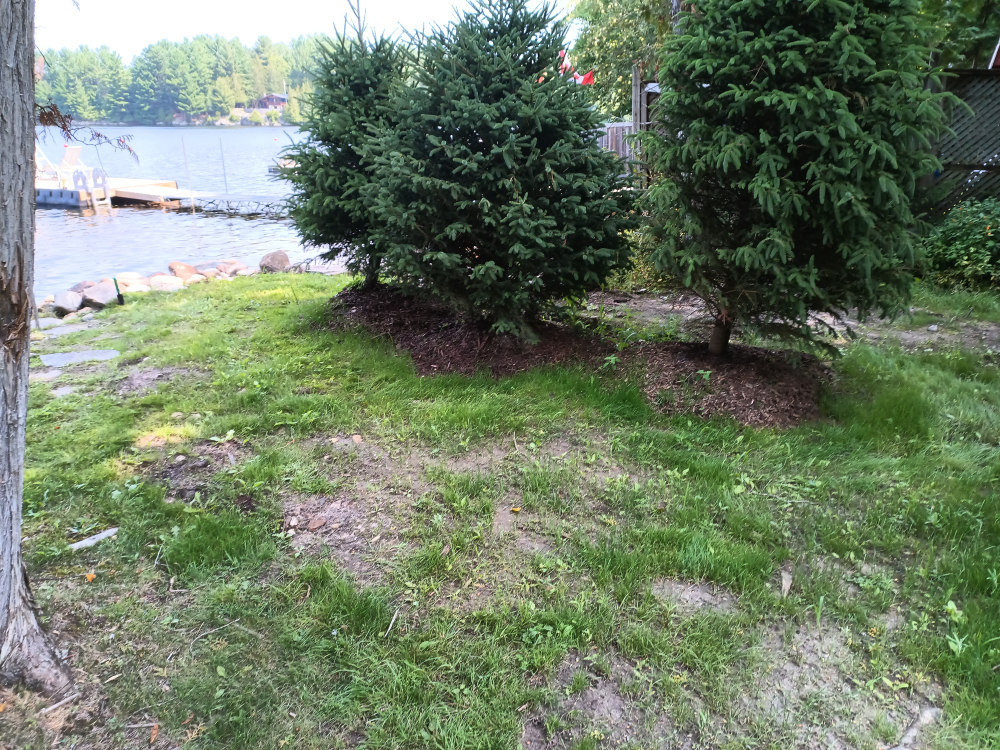
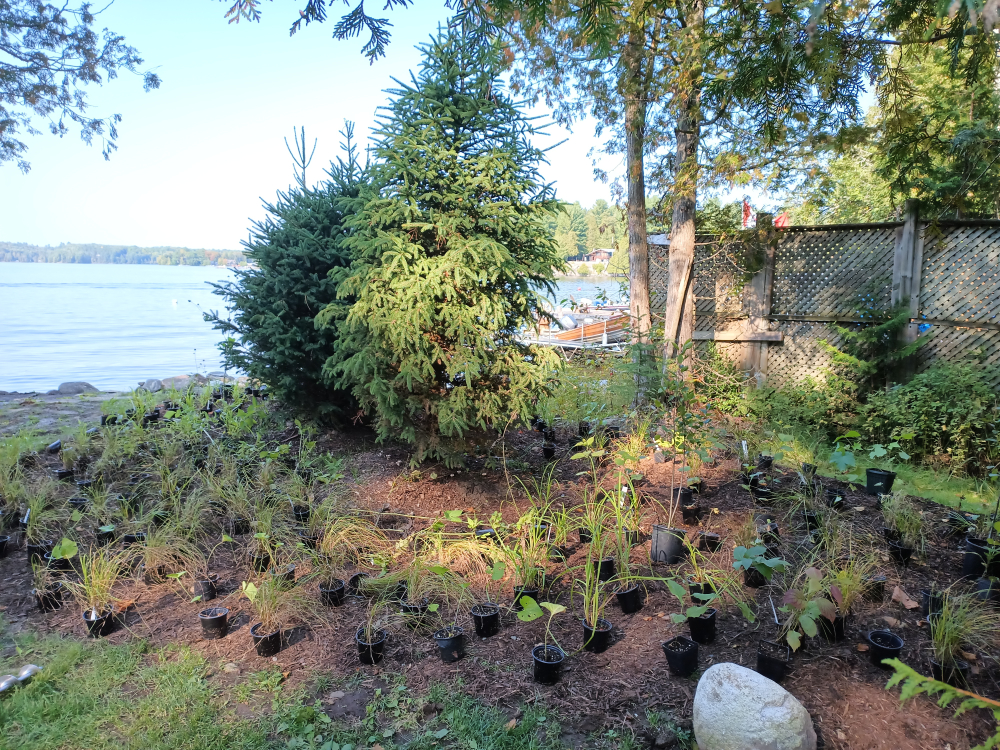
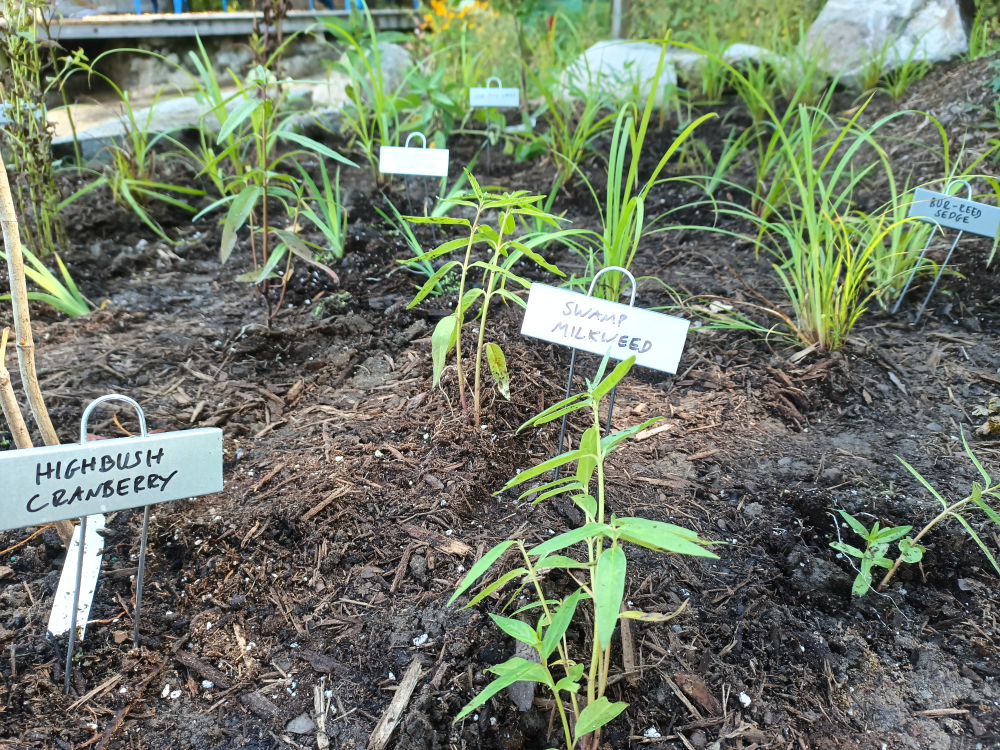
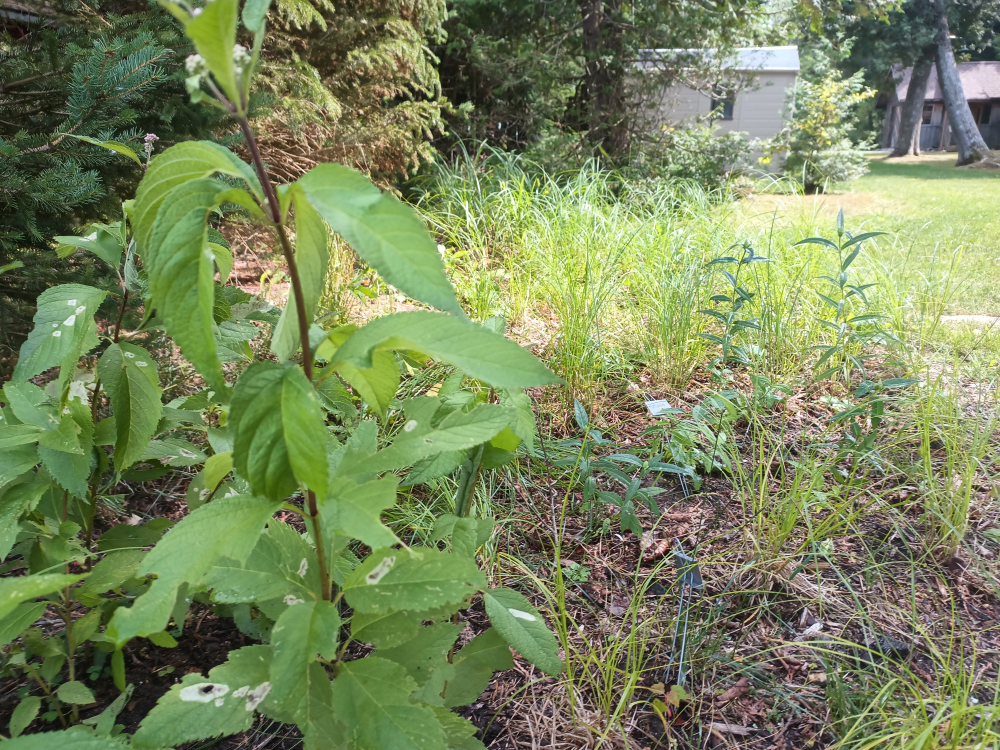
We replaced the grass around some existing conifers and created a moisture-loving shoreline garden. Installed September 2024.
Plant Selection and Layout Methodology
Project Overview
A lakefront property in Minden Hills required conversion from a cleared sauna site to a naturalistic shoreline planting. The project addressed two connected areas: a 240 sq ft moist-to-wet shoreline zone (east-facing, part-sun to shade) and a 60 sq ft wooded bank requiring privacy screening. The client's primary goal was privacy while restoring ecological function to the lakefront. The design needed to work with wet conditions, existing shade, and the presence of invasive Lily of the Valley on the bank.
Site Analysis Summary
Light Conditions
The shoreline site is east-facing with variable light penetration. Some areas receive part-sun while others fall into consistent shade from mature trees. The bank area sits in part-shade under existing canopy. This light gradient became a key organizing principle—wet-tolerant, shade-adapted species near the lake transitioning to woodland edge plants on the bank.
Moisture Conditions
The shoreline zone ranges from moist-drained to genuinely wet, particularly in areas closest to the water. This is a defining site condition rather than a problem to solve. The moisture gradient supports a natural zonation from obligate wetland plants at the water's edge through to facultative species further upslope. The bank area maintains moist but well-drained soil.
Site-Specific Constraints
Privacy requirement: The client needed screening . This drove the emphasis on shrubs for long-term structure and tall perennials for summer-season screening during occupancy.
Lily of the Valley presence: The bank area contains established Lily of the Valley, a persistent non-native invasive. Rather than attempting removal, the design acknowledged this constraint by omitting groundcover from the bank planting—any sedge would likely be outcompeted. The perennials and shrubs selected can hold their own against the Lily of the Valley, though the client was advised to monitor its spread.
Fall installation: Planting occurred in September, meaning many perennials (particularly Turtlehead, Monkeyflower, and Poke Milkweed) were entering dormancy at installation. This is normal for fall planting and means the plants focus energy on root establishment rather than visible top growth.
Existing conifers: A row of conifers partially screens the shoreline. The design works with these rather than replacing them, using perennials to soften their visual presence and fill gaps between them.
Client Parameters
Seasonal occupancy: The client uses the property during the warmer months, making summer bloom and foliage the priority over spring ephemerals. The design emphasizes July-September interest while including some spring contributors.
Maintenance capacity: As a seasonal property, intensive management isn't realistic. The design prioritizes species that establish and persist without regular intervention.
Privacy priority: Screening the neighbouring dock outweighed other aesthetic considerations. This justified the significant investment in shrubs (seven plants including Alternate-leaved Dogwood, Highbush Cranberry, Winterberry, and Flowering Raspberry) that will form a permanent screen within 3-5 years.
Soil Interpretation
- Soil at the shoreline is clearly wet to saturated in areas
- Organic content appears moderate based on colour and texture
- Drainage is poor near the water, improving upslope
- The bank shows moist but functional drainage
Design Implications
Plant selection defaulted to species with established tolerance for wet, moderately fertile conditions typical of Haliburton County lakeshores. The approach assumed moderate-to-low fertility (common in Canadian Shield shoreline soils) and selected accordingly.
Implicit Strategy
The wet, part-shade conditions naturally favour S-strategy (stress-tolerant) and CS-strategy (competitive/stress-tolerant) plants. Genuine competitors would struggle in the wet, shaded conditions. The plant palette reflects this—sedges, Joe Pye Weed, Turtlehead, and iris are all adapted to conditions that exclude aggressive competitors.
Design Strategy
The Three-Layer Approach
The design follows a naturalistic three-layer structure mimicking how shoreline plant communities naturally organize:
Groundcover layer (50% of planting): Hop Sedge and Fox Sedge form the matrix, providing erosion control, wildlife habitat, and visual continuity. Sedges do most of their growing in spring and fall when conditions favour them, filling the gap before perennials emerge and after they senesce.
Vignette layer (40% of planting): Flowering perennials create seasonal interest and contribute to summer-season privacy through height. Species were selected for staggered bloom times to maintain visual interest throughout the occupancy period.
Structural layer (10% of planting): Shrubs provide the permanent framework and long-term privacy screening. Their placement prioritizes sight lines to the neighbouring dock.
Privacy Through Plant Architecture
Rather than creating an instant screen (impossible with native plants at reasonable cost), the design delivers privacy through a two-phase strategy:
Immediate (Years 1-2): Tall perennials—Joe Pye Weed (1-2m), Green-headed Coneflower (1-3m), and to a lesser extent Turtlehead and Monkeyflower—provide summer-season screening while shrubs establish.
Long-term (Years 3+): Shrubs mature to create permanent screening. Alternate-leaved Dogwood reaches 5-8m and develops a distinctive horizontal branching architecture. Highbush Cranberry and Winterberry fill the mid-level at 2-4m. The perennials continue contributing but become less critical as shrub mass develops.
Working With Two Zones
The shoreline and bank function as distinct but related planting areas:
Shoreline zone: Receives the full three-layer treatment. Conditions are wetter and more open. The sedge matrix anchors the design, with perennials providing colour and height, and shrubs forming the long-term screen.
Bank zone: A simpler palette addressing limited conditions. One Alternate-leaved Dogwood provides structure, Poke Milkweed and Zig-zag Goldenrod fill the perennial layer. No groundcover was installed due to Lily of the Valley pressure. This zone requires monitoring to ensure the invasive doesn't overwhelm the new plants.
Plant Community Structure
Matrix Layer: Sedges
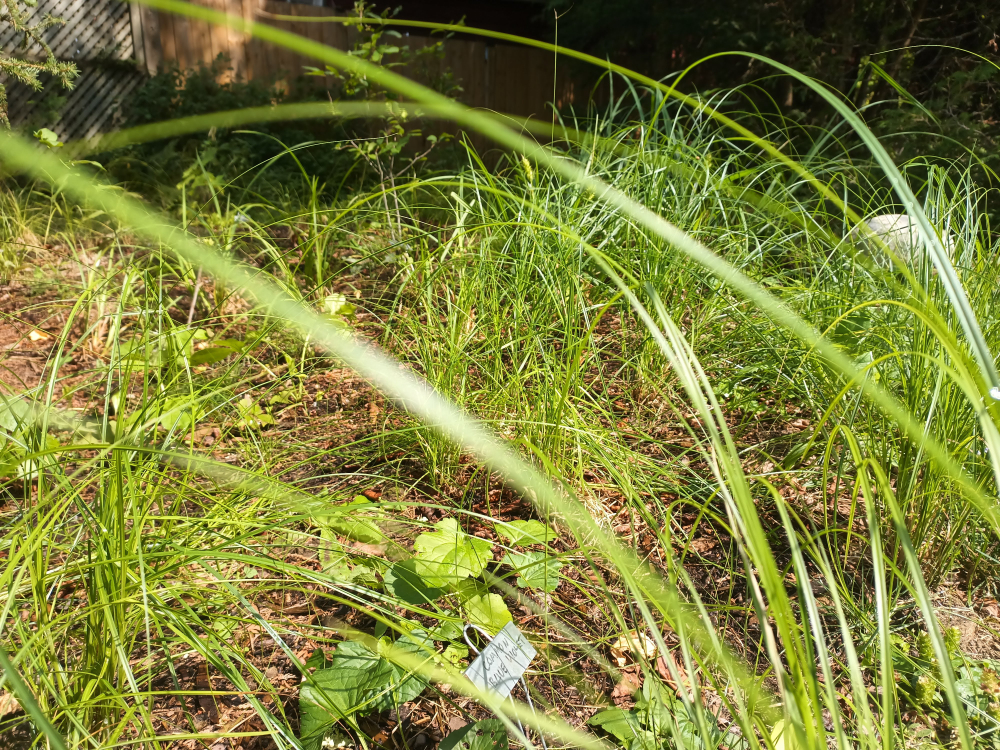
Hop Sedge (Carex lupulina): 150 plants forming the primary matrix. Selection rationale:
- Thrives in wet to saturated soils
- Tolerates full sun to partial shade
- Distinctive hop-like seed heads provide winter interest
- Robust growth (30-100cm) creates substantial presence
- Stabilizes shoreline soil and filters runoff
The choice of a single sedge species (rather than multiple species for textural variety) reflects the relatively small site area and the priority on reliable establishment. The hop-like seed heads create sufficient visual interest without requiring multiple sedge textures.
Vignette Layer: Flowering Perennials
The perennial selection balances bloom sequence, height, moisture tolerance, and shade adaptation:
Spring-Early Summer Interest
Common Blue Violet (Viola sororia): 15 plants scattered throughout. Low-growing (10-15cm) with April-June bloom. Functions as a connector species, self-seeding into gaps. Larval host for fritillary butterflies.
Harlequin Blueflag (Iris versicolor): 8 plants in wettest areas near water. Showy blue-violet flowers May-July. The sword-like foliage provides structural interest even when not blooming. Attracts hummingbirds.
Summer Interest
Green-headed Coneflower (Rudbeckia laciniata): 10 plants placed in front of conifers. Tall (1-3m) with distinctive drooping yellow petals and green cones, July-September. Selected for its ability to break up the visual monotony of the conifer row while contributing to privacy. Can spread aggressively in ideal conditions—placement in less-than-ideal light may moderate this.
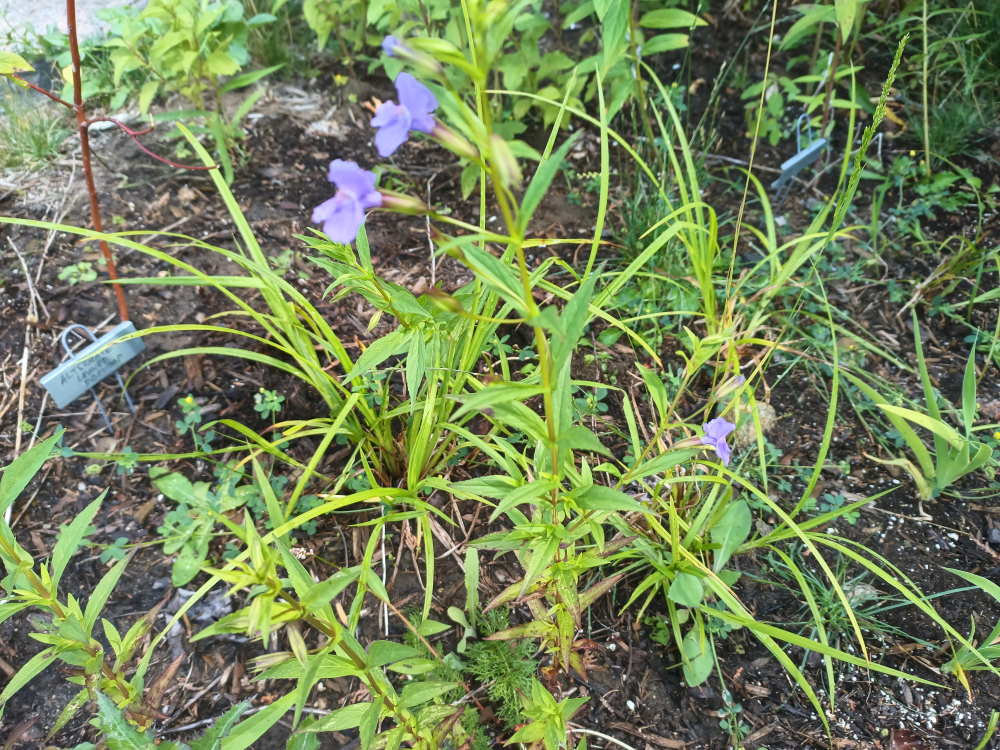
Square-stemmed Monkeyflower (Mimulus ringens): 10 plants in wettest areas. Snapdragon-like lavender-blue flowers July-September. Thrives in saturated conditions where other perennials struggle.
Swamp Milkweed (Asclepias incarnata): 8 plants near water. Pink flower clusters July-August. Critical monarch butterfly host plant and nectar source. Deer-resistant.
Spotted Joe Pye Weed (Eutrochium maculatum): 8 plants. Tall (1-2m) with dome-shaped mauve flower clusters July-September. Major butterfly and bee attractor. Contributes to summer privacy through height.
White Turtlehead (Chelone glabra): 15 plants in wetter, shadier areas. Distinctive white-pink flowers resembling turtle heads, July-September. Host plant for Baltimore Checkerspot butterfly. Nectar source for bumblebees.
Late Season Interest
Zig-zag Goldenrod (Solidago flexicaulis): 30 plants distributed throughout, with concentration on the bank. Yellow flower clusters August-October. Selected specifically for shade tolerance (unlike most goldenrods). Less aggressive than other goldenrod species—appropriate for a managed landscape.
Poke Milkweed (Asclepias exaltata): 15 plants on the bank. Fragrant greenish-white flowers June-August. The shade-tolerant milkweed, suited to the bank's woodland conditions. Another monarch host plant.
Structural Layer: Shrubs
Seven shrubs provide the permanent screening framework:
Alternate-leaved Dogwood (Cornus alternifolia): 2 plants (one shoreline, one bank). Selected as the primary screening element due to:
- Height (5-8m at maturity)
- Distinctive horizontal branching creating architectural interest
- Blue-black berries attractive to birds
- Tolerates partial shade
- Positioned to intercept sight lines to neighbouring dock
Highbush Cranberry (Viburnum trilobum): 2 plants. Mid-level screening at 2-4m. White spring flower clusters, bright red berries persisting into winter. Maple-like foliage provides fall colour.
Winterberry (Ilex verticillata): 2 plants (male and female required for berry production). Deciduous holly reaching 1-4m. Inconspicuous flowers but brilliant red berries persisting through winter—striking against snow. Important winter food source for birds.
Flowering Raspberry (Rubus odoratus): 1 plant placed in the gap between conifers. Thornless, with large maple-like leaves and showy pink flowers. Reaches 1-2m. Selected for its ability to fill a specific gap rather than general screening.
What Was Excluded
Several plants from the initial concept document didn't make the final design:
Red Osier Dogwood: Mentioned in concept, replaced by Alternate-leaved Dogwood for greater height and architectural presence.
Bebb's Sedge and Bur-reed Sedge: Listed as potential groundcovers. Hop Sedge was selected instead for its robust character and distinctive seed heads, simplifying the matrix to a single species.
Woodland Sunflower: Mentioned in concept. Excluded due to spreading tendency that could create management burden in a relatively small planting.
Wild Bergamot: Listed in concept. May have been excluded due to preference for wetter-adapted species, though it would have been appropriate for drier portions of the site.
Spatial Organization
Zone Logic
The design creates a natural gradient from wet to mesic conditions:
Waterside zone: Blueflag, Monkeyflower, and Swamp Milkweed occupy the wettest areas closest to the lake. These obligate or facultative wetland plants establish the aquatic edge.
Shoreline transition: The sedge matrix dominates this zone, with Joe Pye Weed, Turtlehead, and Coneflower providing height and colour. This is where most screening function occurs.
Upslope/bank zone: Zig-zag Goldenrod, Poke Milkweed, and Alternate-leaved Dogwood occupy the drier, shadier bank area. These species tolerate reduced moisture and increased shade.
Bloom Sequence
The design delivers visual interest throughout the occupancy season:
| Period | Primary Contributors |
|---|---|
| April-June | Common Blue Violet |
| May-July | Harlequin Blueflag |
| June-August | Poke Milkweed |
| July-August | Swamp Milkweed |
| July-September | Green-headed Coneflower, Monkeyflower, Turtlehead, Joe Pye Weed |
| August-October | Zig-zag Goldenrod |
| Winter interest | Winterberry berries, Hop Sedge seed heads, bronze stems |
Textural Balance
The planting creates contrast through foliage textures:
Fine texture: Sedge matrix, Goldenrod foliage
Medium texture: Milkweeds, Turtlehead, Violet
Bold texture: Blueflag swords, Joe Pye Weed, Coneflower lobed leaves, Dogwood horizontal branching
The shrubs provide structural anchors against the fine sedge matrix, preventing visual monotony.
Expected Development
Year One: Establishment
First-season priorities:
- Watering if rainfall insufficient (10mm per 5 days minimum)
- No weeding until plants can be reliably identified
- Deer protection (Bobbex) recommended for shrubs
- Expect limited visible growth from fall-planted stock
Coverage will reach approximately 40-50% by end of first full growing season. The sedge matrix will begin spreading. Some perennials (particularly those planted in dormancy) may not flower until their second year.
Years Two-Three: Development
- Sedge matrix fills to 70-80% coverage
- Perennials establish flowering cycles
- Shrubs begin developing framework
- Privacy screening improves through perennial height
- Weed pressure decreases as groundcover establishes
- Some editing may be needed if aggressive spreaders (Coneflower, Joe Pye Weed) begin dominating
Years Four and Beyond: Maturity
- Shrubs reach screening height (Alternate-leaved Dogwood may take 5-7 years for full effect)
- Community becomes self-sustaining
- Winterberry produces berries (requires both male and female established)
- Management shifts from establishment support to occasional editing
The garden will change year to year—plants self-seeding, spreading, and occasionally dying as part of natural dynamics. This isn't a traditional garden requiring maintenance to preserve a static design, but a plant community that will develop its own character over time.
Summary
- Site conditions identified: Wet-to-moist shoreline, part-sun to shade, privacy requirement, Lily of the Valley on bank
- Strategy determined: Three-layer naturalistic design emphasizing shrubs for long-term screening, tall perennials for immediate privacy
- Layer allocation settled: 50% groundcover (sedge matrix), 40% vignette (flowering perennials), 10% structural (shrubs)
- Species selected for moisture and shade tolerance: Obligate and facultative wetland plants near water, shade-tolerant selections throughout, deer-resistant where possible
- Spatial organization followed site gradient: Wet-adapted species at waterside, transitioning to woodland species on bank
- Privacy prioritized placement: Shrubs positioned to intercept sight lines, tall perennials distributed for summer screening
What Success Looks Like
In five years, this shoreline should function as a naturalistic lakefront plant community providing:
- Year-round visual interest (spring bloom through winter berries and seed heads)
- Effective privacy from neighbouring property
- Wildlife habitat (monarchs, swallowtails, checkerspot butterflies, native bees, birds)
- Shoreline stabilization and water filtration
- Low-maintenance landscape requiring occasional editing rather than intensive care
The design works with site conditions rather than transforming them. The wet soil isn't a problem to solve but a condition to match with appropriate plants. The shade isn't a limitation but a filter selecting for adapted species. This is what naturalistic design means in practice—not forcing a predetermined vision onto a site, but developing a vision from what the site offers.
Get updates by email
Fill out the form to get updates about Grounded and native plant gardening.