
Something’s missing but I don’t know what
I grew up in the suburb of a small English city. If I turned right out of my road and kept going, I’d end up at the edge of town. And if I kept going further, I’d arrive at Spring Wood.
Five minutes from the suburbs and two from the highway, Spring Wood felt like a little oasis. It was an ancient wood, a remnant of when England was forested. So to me, it was a little patch of nature.
I remember the thick and twisted branches of the old oak trees and their acorns that littered the ground in fall. There were thickets of blackberries you could never enter, and open areas of trees with leaves that forbid light. Going there felt like putting on a shroud of silence.
One day, part of the wood was coppiced – an ancient practice to manage woodland for timber and firewood. There was a winding path through the coppiced area, and because more light was reaching the ground, plants grew up each side of the path, making every corner a new discovery. I can still smell the warm grass.
Then I’d ride my bike home.
In and out of the city
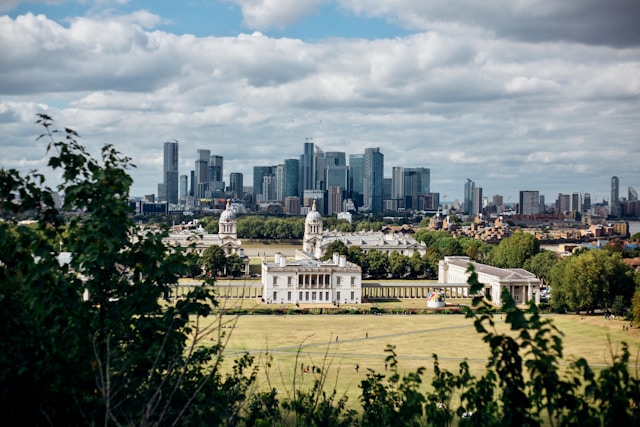
I lived in London for a few years when I got my first job. My flat looked over the docklands area, with its blinking towers and planes coming into land.
A ten-minute walk away was Greenwich Park, home of the observatory, where time was counted.
The park was on a hill, high over the river and the city towers. The financial district was like a backdrop while I wandered on the grass, amid the trees, as the wind blew from the north.
On some weekends I’d go home to Suffolk and I’d visit the countryside with my parents. When the train crossed the estuary at Manningtree, I’d breathe out.
As a guy in his 20s, the roads and the offices were where life and career lived. And yet.
The drive up north
When I moved to Canada, I lived first in a condo in downtown Toronto. One bedroom, 18 floors up.
We had a cottage here and we’d visit on weekends.
It was a long drive up the Parkway on a Friday night, nose-to-tail up Highway 48. Leave it too late and it would take even longer. Wait until the traffic was quieter and I’d arrive a wreck.
When I finally got here, I’d walk to the water and notice the smell of pine needles. Sometimes I’d have to move a branch that had snapped off and fallen over the steps.
I’d see what the lake was doing – how high and how chilly the water was. I’d say hello to the familiar tree and poke a stick into the bubbles of sticky resin on its trunk.
One summer there was a grouse that followed me from deck to lake like a puppy. When it wasn’t with me, I could hear it because it made a sound like a two-stroke engine starting.
Remembering
I’m not the only one to do this. The three hours of agony and burgers on a Friday, the relaxation when you touch the forest, then the three hours of ice cream and tail lights on a Sunday night.
Eighteen years ago, I moved here full time and spent weekends in the city. My drive was against the traffic, not with it. The journey recalled a decades-long pattern. I was swapping a comfortable blanket for a cold slab.
I still remember Spring Wood but I don’t dare go back, just in case it’s not the same. In case the tree trunks are scored with graffiti. Or the wood is gone completely.
I prefer to remember the bluebells in April, and the feeling of biking up the pathway and turning left into the darkness of the trees.